Turn a School Compliance Calendar into Weekly Action
A calendar shows what is due; a weekly routine makes clear who will act, what evidence is needed, and when to raise a concern. Use a simple ownership-and-escalation process to keep deadlines visible without building another spreadsheet.
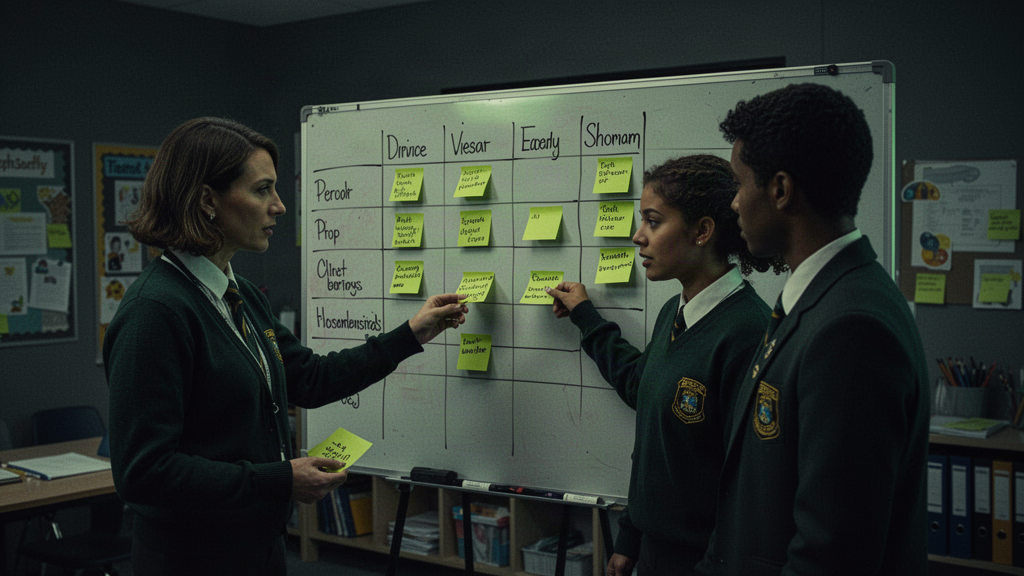
Start with deadlines that require action
A compliance calendar can become a list of dates that people notice only when they are close. Make it useful by translating each deadline into a next action. For every item, record what must be completed, who needs to do it, and the date by which the school needs the work—not just the external due date.
For example, if a submission is due on Friday, the school’s working deadline might be Tuesday, leaving time to check the materials and address missing information. The appropriate buffer will vary by task; choose one that reflects the steps involved rather than adding the same number of days to every item.
Start with obligations already on the calendar, then clarify any ambiguous entries with the relevant school or district contact. Avoid treating a reminder as proof that a requirement has been met. A deadline entry is a prompt to act; completion should be confirmed separately.
Give every item one accountable owner
Each deadline needs one person responsible for moving it forward. That person may ask colleagues for input or divide up the work, but the group should know who is checking progress and raising a concern if something slips. Shared responsibility without a named owner can make it difficult to know who should follow up.
Use roles that are clear to your school community. For instance, a principal might own the review of a policy submission while an office administrator gathers the required documents. Write down the distinction: the administrator prepares the materials; the principal confirms they are ready to submit. If a task changes hands, update the owner directly rather than relying on an informal conversation.
Keep the assignment proportional. A leader does not need to personally complete every task, but should know which deadlines need their attention. This is where a consistent school operations workspace can support a shared way of working, provided the school agrees on how responsibilities are recorded and reviewed.
Define evidence before work begins
“Done” should mean something observable. Before work starts, specify what evidence will show that the task is complete: a dated record, a reviewed document, a confirmation from the responsible office, or another appropriate artifact. The right evidence depends on the requirement; do not collect extra sensitive information simply because it might be useful later.
For example, instead of marking “staff training” complete, define the evidence your school expects, such as a completion record or an attendance record, if that fits the requirement. Identify where the record belongs and who checks it. Make sure the evidence is accessible to the people who need to verify completion, while following your school’s established handling and retention practices.
This small decision reduces last-minute searching and makes handoffs clearer. It also helps distinguish between a task that is finished and one that is merely scheduled. When reviewing your compliance and deadline tracking approach, look for places where “complete” is vague and settle the evidence standard with the people doing the work.
Make escalation routine, not personal
Escalation works best when it is an agreed step in the process—not a judgment about an individual. Decide in advance what triggers a check-in. A practical rule might be: if the owner cannot confirm progress by the internal checkpoint, they tell their manager what is blocked, what help is needed, and whether the deadline is at risk.
Use a short, factual update: “The review is not complete; I’m waiting for the enrollment figures. I need help confirming who can provide them today.” This gives a leader something specific to resolve. Avoid waiting until the external due date to disclose a blocker, and avoid escalating every small delay if the owner has a clear plan and adequate time.
Leaders can make the routine safer by responding to early warnings with problem-solving. If the same dependency repeatedly causes delays, adjust the process or assign a contact for it. A weekly review should reveal obstacles early, not create a second round of status reporting.
Run a 20-minute weekly review
Choose a fixed time and review only deadlines that are approaching, overdue, blocked, or dependent on another person. Keep the discussion focused: Is the owner still correct? Is the next action clear? Is the evidence standard understood? Does anyone need a decision or help? Record the outcome where the team keeps its agreed work—not in a parallel spreadsheet that no one maintains.
A short checklist: • Confirm the next internal and external dates. • Check that each item has one accountable owner. • Name the next action and the evidence that will confirm completion. • Surface blockers and identify who will resolve them by when. • Close completed items only after the agreed evidence is checked.
Next action: take the next four weeks of calendar items and run a first review with the people responsible for them. Agree on owners, evidence, and one escalation trigger for each item that needs it. If you are considering OnwardSync, use that exercise to define the operating routine you want the workspace to support; do not assume an undocumented integration or feature is available. Find more practical operations ideas in the Onward blog.
Common questions
How far ahead should we set an internal deadline? Set it far enough ahead to allow the actual review, corrections, and handoffs your task requires. Use different buffers for different kinds of work, and revise them when your weekly reviews show they are consistently too short or unnecessarily long.
What should we do when a deadline has no clear owner? Assign one accountable person before treating the item as ready for routine tracking. That person can coordinate contributors, but a leader should resolve competing claims or unclear authority and make the assignment explicit.